



- Trump’s fresh nuclear test plan revives global tension
- Analysts debate if India should revisit Pokhran after decades
Delhi/Hyderabad, Nov 5 (Maxim News): The world stands once again on the edge of a nuclear era. After three decades of restraint, America’s decision to resume nuclear testing has sent shockwaves through the international community. President Donald Trump announced that the United States will conduct underground nuclear tests for the first time since 1992, marking a turning point in global security discourse.
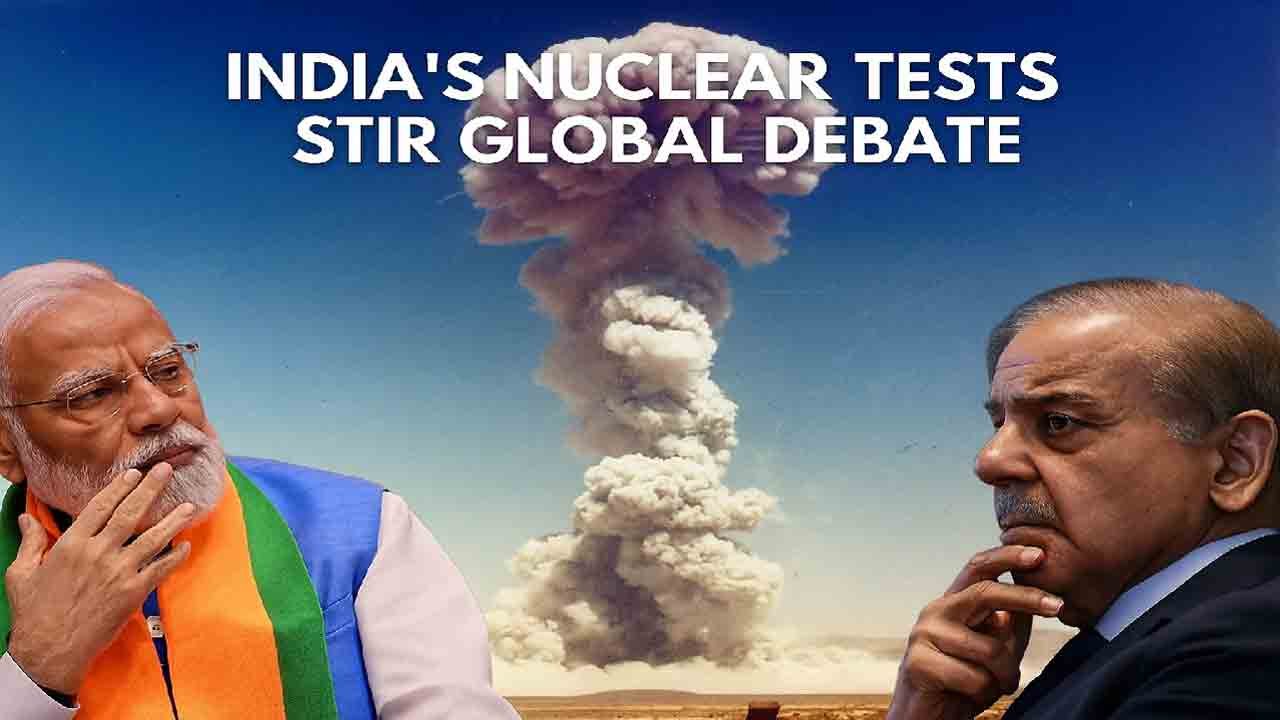
This move has reignited global competition. Russia has tested a nuclear-powered underwater drone, while China has displayed an orbital bomb system capable of striking from space. With these parallel developments, attention has returned to India, a nuclear power that halted its own testing voluntarily after Pokhran. Experts suggest that India might be reconsidering whether to demonstrate its nuclear strength once again, especially with two nuclear-armed neighbors—Pakistan and China—enhancing their arsenals.
India’s Pokhran tests in 1998 took the world by surprise and established it as a nuclear power. However, the tests also ignited controversy. DRDO scientist Santhanam claimed that India’s hydrogen bomb test was not fully successful, suggesting it produced only 10 to 15 kilotons of energy instead of the 58 kilotons officially announced. Rajagopala Chidambaram, then head of India’s nuclear program, firmly rejected this claim, stating the tests were successful. Later, international seismological readings further fueled suspicions, keeping the Pokhran results under debate.
Now, as global powers return to nuclear experimentation, the question resurfaces: should India follow? With an estimated 180 warheads compared to Pakistan’s 170 and China’s 600-plus, India’s position is strategic yet delicate. Some experts argue that fresh tests could verify thermonuclear designs and bolster India’s no-first-use policy. Others warn that new explosions could endanger international agreements and revive scrutiny of India’s nuclear commitments.
As global control systems weaken—with the CTBT treaty unratified by major powers—India faces a defining choice. Maintaining silence ensures stability, while testing could reassert deterrence. In the calm of Pokhran’s desert, debate grows stronger. If India’s sands tremble again, it could mark not just another test but the dawn of a new nuclear era.
Now you can get the latest stories from Indtoday on Telegram every day. Click the link to subscribe. Click to follow Indtoday’s Facebook page, Twitter, and Instagram. For all the latest Hyderabad News updates