


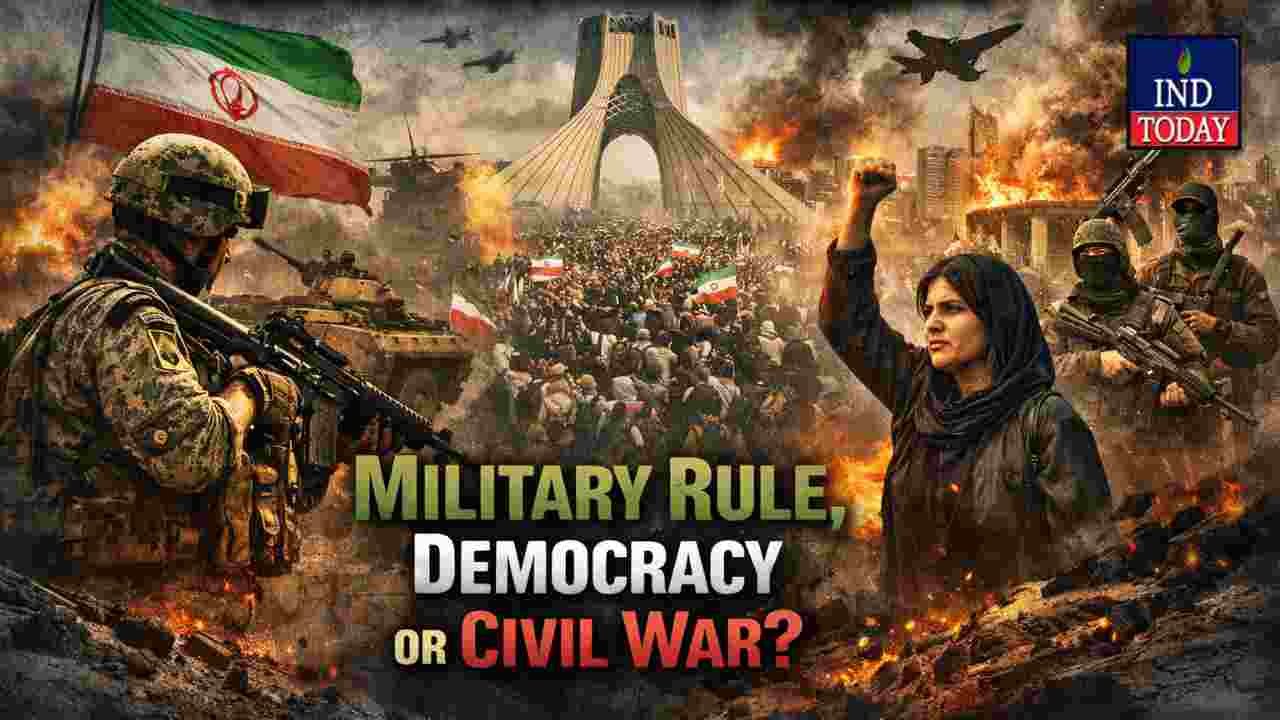
Tehran/Hyderabad, Mar 1 (Maxim News) Iran, a nation with centuries of history, is now facing one of the most critical moments in its existence. After the attacks on February 28, 2026, the country stood at a crossroads. Three possible paths lie ahead. Each one could shape Iran’s future in a very different way.
Let us examine these three scenarios and their possible consequences.
1. Theocratic Military Rule
At present, the most powerful force in Iran is the Islamic Revolutionary Guard Corps (IRGC). If Supreme Leader Ali Khamenei dies, the IRGC could move quickly to take control.
Instead of following the constitutional process to appoint a new Supreme Leader, the IRGC may influence the selection. For example, they could support someone like Mojtaba Khamenei. In such a case, real power would likely remain with the IRGC behind the scenes.
Possible Consequences
First, martial law could be imposed to suppress protests. At the same time, Iran may intensify attacks against the United States and Israel to divert public anger.
Moreover, Iran could become more isolated internationally. Since it already faces heavy sanctions, the country might move closer to a model similar to North Korea. As a result, diplomatic and economic ties with the world could shrink further.
2. Transition to a Secular Democracy
Another possibility is the fall of the Islamic Republic system. In that case, a secular democratic government could emerge.
If this happens, Iran may try to rebuild relations with Western nations. Consequently, sanctions could be lifted. The economy might recover gradually.
However, such a transition would not be easy. The Islamic political system has been in place for over 45 years. Therefore, sudden change could create administrative confusion and instability. Power struggles may also arise during the transition period.
3. Internal Civil War
This is the most dangerous scenario. If rival factions fight for power, the country could descend into chaos.
For instance, divisions within the IRGC could trigger armed clashes. Alternatively, conflict could break out between the IRGC and the regular army, known as the Islamic Republic of Iran Army (Artesh).
In addition, ethnic minority groups such as Kurds and Baloch communities may demand greater autonomy. If they take up arms, the conflict could spread across multiple regions.
Possible Consequences
Iran could face a situation similar to Syria. The nation might break into smaller territories. Violence could continue for years.
Furthermore, global powers may intervene indirectly. For example, Russia and China might support one faction. Meanwhile, the United States and Israel could back another. This would turn Iran into a prolonged battleground.
As a result, millions of civilians could flee. Refugee flows would increase pressure on neighbouring countries.
Iran is at a decisive moment. Whether it moves toward tighter military control, democratic reform, or internal conflict will shape not only its own future but also regional stability.
The coming months could determine which path becomes reality. (Maxim News)