
Shabbir Ali Welcomes SC Stay On The Waqf Act Clauses

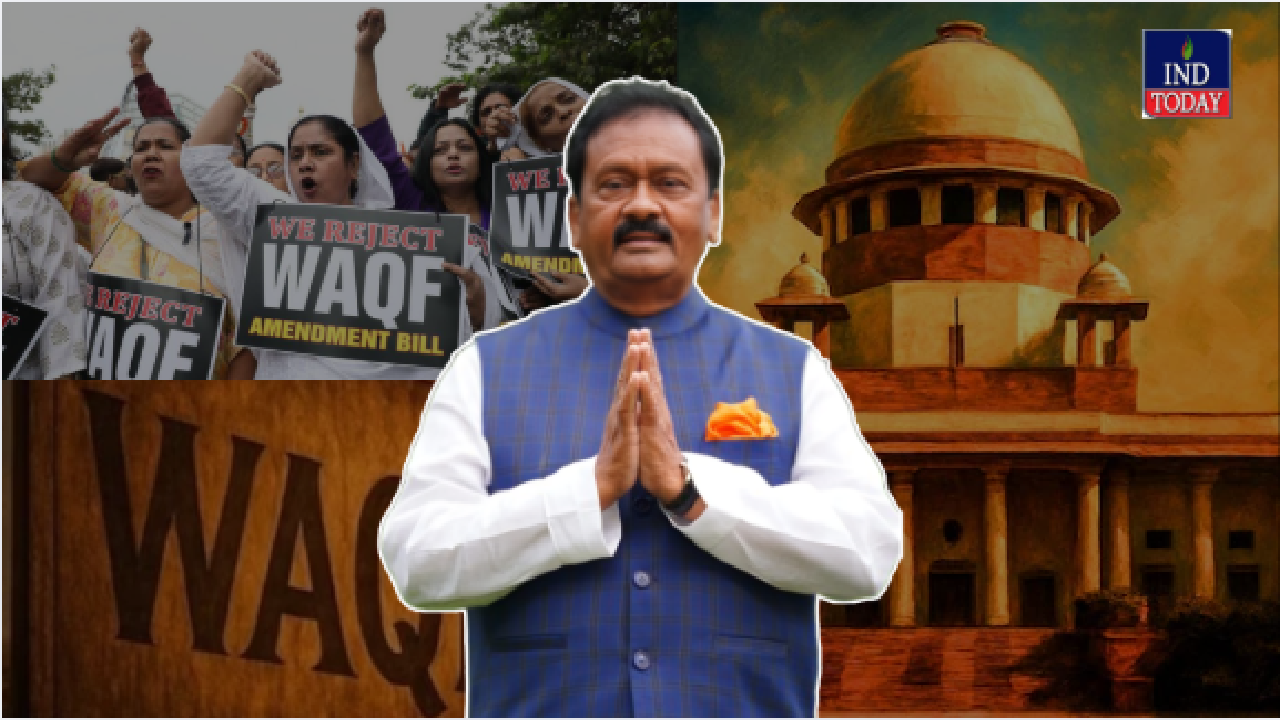
Hyderabad, September 15: Advisor to the Telangana Government and senior Congress leader Mohammed Ali Shabbir has termed the Supreme Court’s interim stay on certain provisions of the Waqf (Amendment) Act 2025 as a “welcome relief” that acknowledges and validates the concerns raised by minority communities, civil society groups, and constitutional experts.
Shabbir Ali, who is among the petitioners challenging the law, said the Supreme Court’s decision to stay the implementation of two controversial clauses marks a crucial step in protecting the constitutional rights of Muslims and the autonomy of waqf institutions.
“The Supreme Court has stayed the provision that required a person to be a practising Muslim for five years to create a waqf, and another provision that authorised government officials to adjudicate disputes over waqf encroachments. These were among the most dangerous parts of the 2025 amendments, and we are relieved that the Hon’ble Court has intervened,” he said in a statement on Monday.
The Waqf Amendment Act 2025, passed by Parliament earlier this year, had triggered widespread criticism for allegedly undermining the independence of the Waqf Boards and infringing on religious freedoms. Several PILs were filed before the Supreme Court, with Shabbir Ali and other co-petitioners arguing that the law violates Articles 14, 21, and 25 of the Constitution by imposing arbitrary restrictions on the creation of waqf properties and weakening institutional safeguards.
SC Relief on Waqf Act Is Substantive: Shabbir Ali
Shabbir Ali pointed out that while the Supreme Court has not stayed the entire law, the interim relief provided is not symbolic – it is substantive. It demonstrates that the judiciary has taken note of the flawed drafting and unconstitutional intent behind key clauses of the Act.
“This is not just a procedural stay. It is a judicial acknowledgment that some provisions of the new law may indeed be unconstitutional. We welcome this relief, but this is only the beginning,” Shabbir Ali said.
SC Stays 5-Year Muslim Practice Rule for Creating Waqf
He added that the requirement of being a practising Muslim for five years to create a waqf was not only discriminatory but also deviated from centuries-old Islamic jurisprudence and customary practices that governed waqf creation in India. “The BJP-led NDA government at the Centre tried to introduce religious policing in property matters by inserting arbitrary faith tests. This would have opened the door to harassment, exclusion, and legal chaos,” he said.
On the other stayed clause, which allowed government-appointed officials to settle disputes about waqf encroachments, Shabbir Ali argued that such power would have compromised due process, since encroachment disputes typically require judicial adjudication, not administrative orders. “The Waqf Board’s ability to legally reclaim its land depends on the sanctity of an independent judicial process. Authorising executive officers to play judge in such matters is not just illegal but dangerous,” he said.
While expressing satisfaction over the interim reliefs, Shabbir Ali was cautious not to portray the verdict as a complete victory. He underlined that several other problematic provisions remain operational, and the apex court has not yet delivered its final judgment on the constitutional validity of the full Act. “Let there be no confusion – this is not the end of the road. The matter is under active judicial consideration, and we will continue to fight every clause that infringes upon our constitutional rights, dilutes minority protections, or undermines the integrity of waqf institutions,” he said.
Waqf Amendments Centralise Control: Shabbir Ali
Shabbir Ali also said the amendments, enacted without incorporating the objections raised by the opposition parties, religious and social organisations, had essentially transformed the nature of the waqf system by turning a community-managed religious trust into an apparatus vulnerable to centralised government control.
The law, as challenged, had also introduced stricter definitions of waqf, provisions for digital registries without community oversight, and new procedural hurdles for validating historical waqf claims – all of which, according to Shabbir Ali, form part of a larger agenda to weaken minority rights over land and religious institutions.
Shabbir Ali reiterated that the legal campaign was not politically motivated but grounded in the constitutional duty to protect the religious, legal, and cultural rights of Indian Muslims. “We approached the Court with faith in the Constitution. This interim order strengthens that faith. We will continue our efforts – legally, socially, and politically – to preserve the spirit of justice and pluralism in our democracy,” he said. (Maxim News)
Now you can get the latest stories from Indtoday on Telegram every day. Click the link to subscribe. Click to follow Indtoday’s Facebook page, Twitter, and Instagram. For all the latest Hyderabad News updates
Next Story:
Cyber Security Courses Open Online Applications
![Cyber Security Courses Open Online Applications]()
Cyber Security Courses invite Telangana applicants for certified online training with career opportunities in cyber security roles in India and abroad.
Vinay Suicide Case Shocks Kamareddy Village
![Vinay Suicide Case Shocks Kamareddy Village]()
Vinay Suicide Case shocks Kamareddy as a newly married man is found dead in a quarry after going missing during Ugadi celebrations.
Harish Rao Criticises Telangana Budget 2026
![Harish Rao Criticises Telangana Budget 2026]()
Harish Rao attacks Telangana Budget 2026 27 and says six guarantees lack funding and welfare promises remain unmet.