
Supreme Court Stays UGC Regulations On Caste Bias

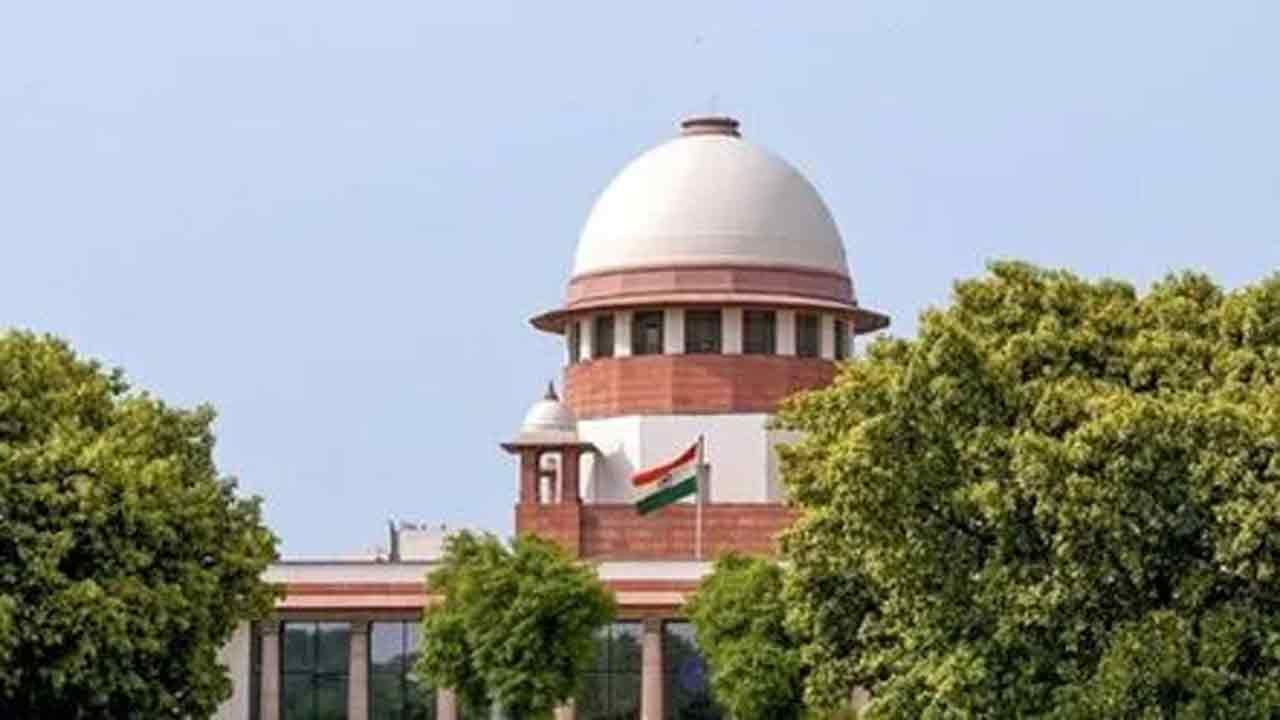
- Court flags risks in UGC Regulations on caste discrimination
- Judges raise concerns over impact on unity in education
The Supreme Court on Thursday stayed the University Grants Commission Promotion of Equity in Higher Education Institutions Regulations 2026, saying the new framework raised serious questions and could have wide and harmful effects. The court said the Regulations, if allowed to operate, could divide society and lead to dangerous outcomes. Therefore, it ordered that the earlier 2012 Regulations would continue until further directions.
Issuing notice to the Centre and the UGC on a group of petitions challenging the rules, a bench led by Chief Justice of India Surya Kant and Justice Joymalya Bagchi kept the 2026 Regulations in abeyance. The bench invoked its powers under Article 142 and clearly directed continuity of the 2012 Regulations. The order came amid concerns that the new provisions could alter the approach to handling caste based discrimination in higher education institutions.
Supreme Court questions scope of UGC Regulations 2026
While hearing the matter, the Chief Justice stressed that multiple legal and social issues required close examination. “There are 4-5 questions which arise for consideration. Otherwise, this will have very sweeping consequences. It will divide the society. It will lead to so many…very dangerous impact,” CJI Kant said in court. The bench indicated that unresolved questions within the Regulations could have long term effects on the education system.
Justice Joymalya Bagchi also expressed concern about the broader implications. He cautioned against any framework that could encourage separation within educational spaces. “We should not go to a stage where we go to segregated schools as in the United States, where coloured children go to one school, and White boys and girls go to another school. The unity of India must be reflected in the educational institutions,” he said. The remarks highlighted the court’s focus on social cohesion alongside legal scrutiny.
Concerns over clauses in UGC caste discrimination rules
The petitioners mainly challenged Section 3(c) of the Regulations. During the hearing, the Chief Justice referred to cases where students face harassment in different regions on regional lines. He asked whether such situations were addressed under the new framework. In response, the petitioners pointed to Clause (e), which defines what constitutes discrimination.
This led the bench to question the need for Clause (c). Justice Bagchi examined the evolution of the Regulations and their stated aim of creating a free and equitable university atmosphere. “We are looking into the evolution of the Regulations to create a free and equitable atmosphere in universities… When we see this, we see no reason why Section 2(e) continues to subsist as it did in the 2012 Regulations.
How does 2(c) become relevant? Is it a redundancy? How do you interpret it?… We fail to understand when 2(c) is already ingrained in 2(e), why was it culled out as a separate definition clause?” he said.
Meanwhile, the court made it clear that the legal challenge would continue. However, until further orders, the Supreme Court ensured that the existing 2012 framework would govern issues of equity and discrimination in higher education.
Now you can get the latest stories from Indtoday on Telegram every day. Click the link to subscribe. Click to follow Indtoday’s Facebook page, Twitter, and Instagram. For all the latest Hyderabad News updates and Follow us on GoogleNews
