
Delhi Car Blast Linked To Larger Terror Plot

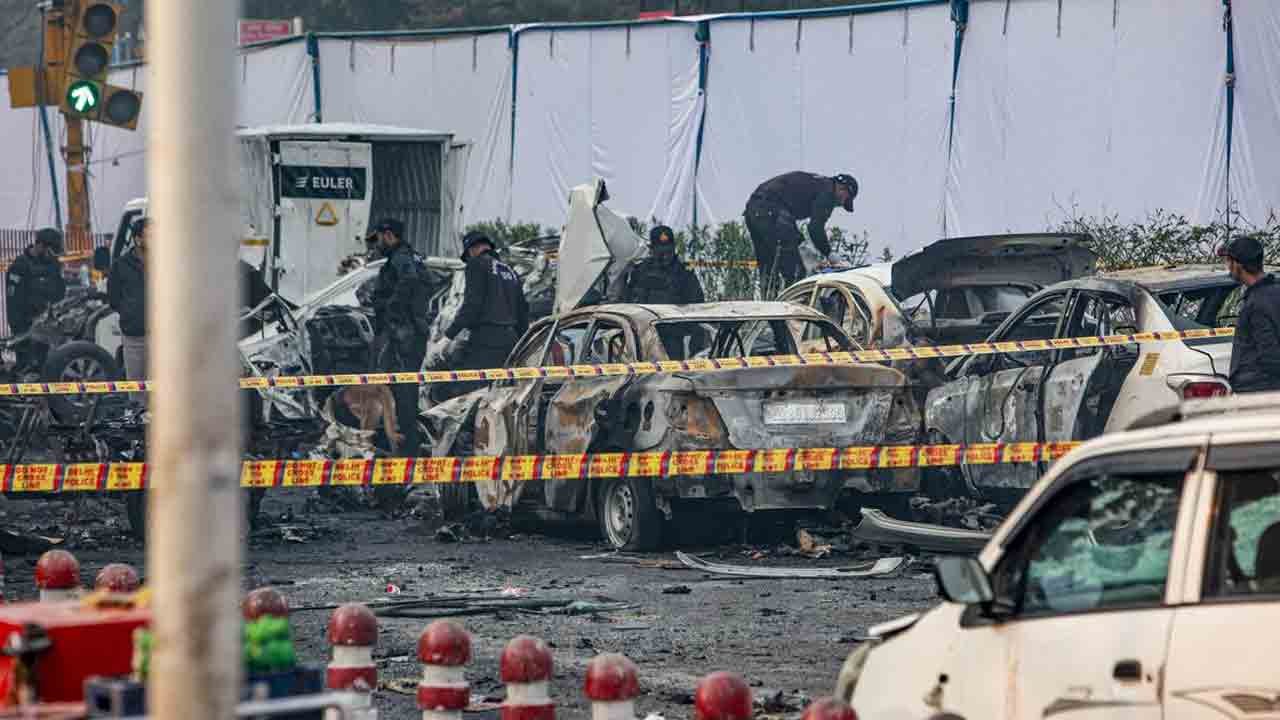
- Preliminary probe traces car route and finds links to Faridabad module
- Agencies investigate terror plan to target key Delhi locations
A preliminary investigation into the Red Fort car blast has revealed alarming details suggesting that the explosion was part of a larger terror conspiracy. The blast occurred on Monday evening when a white Hyundai i20 exploded on Netaji Subhash Marg near the Red Fort, killing eight people, including three who were inside the car. Investigators discovered that the vehicle had been parked outside the Sunheri Masjid for nearly two hours before the explosion.
According to police, CCTV footage from the Daryaganj Market to the Red Fort area shows the car’s route. The vehicle was seen arriving near the mosque’s parking lot around 4 p.m. and later took a U-turn near Old Delhi Railway Station before heading toward Lower Subhash Marg. The explosion took place at 6:31 p.m., seconds after the car slowed down at a traffic signal near Chhata Rail Chowk. Officials stated that it remains unclear whether the car was supposed to detonate at that point or if the occupants planned to drive it into the Red Fort.
Investigators are tracing the car’s ownership, as records show that the Hyundai i20 bearing registration number HR26CE7674 was first registered in 2014 to Mohammad Salman from Gurugram. The car was sold multiple times afterward—to a person named Devender and later to someone in Ambala. While the current owner remains unidentified, police have arrested the registered owner for questioning. Multiple agencies, including the National Investigation Agency (NIA), the Intelligence Bureau (IB), and Delhi Police’s Anti-Terror Unit, are working together on the case, while Ambala Police have launched a parallel inquiry.
Union Home Minister Amit Shah has confirmed that a comprehensive investigation is underway to explore every possible angle. Authorities suspect that this blast could be linked to the recently busted Faridabad terror module, where 2,900 kilograms of explosives were seized. Officials believe the module planned multiple attacks across Delhi and neighboring states by loading cars with explosives and possibly ramming them into high-value targets.
Security has been tightened across the national capital and nearby regions. Additional police and CISF personnel have been deployed at government buildings and vital installations. Agencies suspect that the blast was only one part of a series of planned attacks intended to cause widespread destruction. Prime facie evidence suggests that the terrorists aimed to trigger multiple car explosions across Delhi, including near metro stations and key public areas, potentially executing suicide bombings to maximize damage.
Now you can get the latest stories from Indtoday on Telegram every day. Click the link to subscribe. Click to follow Indtoday’s Facebook page, Twitter, and Instagram. For all the latest Hyderabad News updates
