




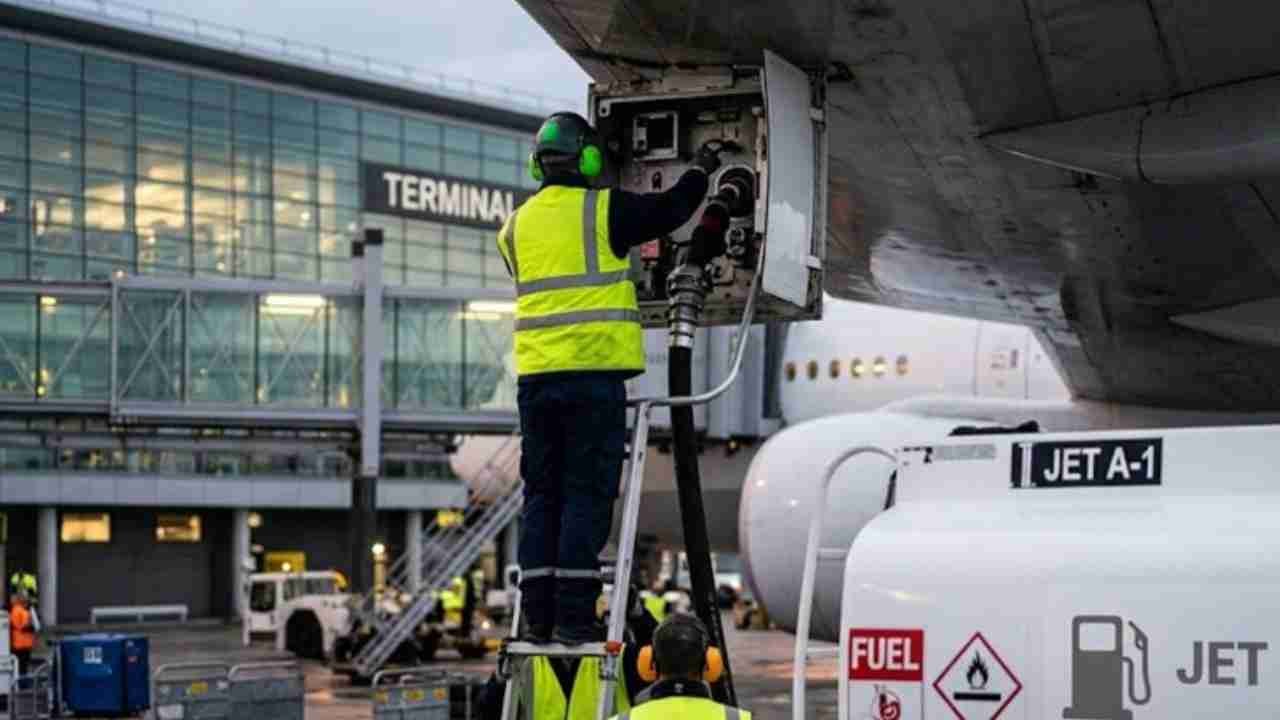
New Delhi: India has the potential to convert agricultural waste into sustainable aviation fuel (SAF) by combining crop residue with low-cost green hydrogen, according to a new report jointly prepared by the India Energy and Climate Centre, the UC Berkeley Goldman School of Public Policy, and Energy Innovation Policy and Technology.
The report says the proposed Power-and-Biomass-to-Liquids (PBtL) pathway could help India reduce crude oil imports, curb stubble burning, cut aviation emissions, and create a globally competitive sustainable aviation fuel industry.
Turning Crop Waste into Clean Jet Fuel
According to the report, the PBtL process converts surplus agricultural residue, including rice and wheat straw, into synthesis gas through gasification. The gas is then combined with green hydrogen and processed using the Fischer-Tropsch method to produce sustainable aviation fuel.
Researchers noted that India’s abundant agricultural residue and rapidly declining green hydrogen production costs position the country as a potential global leader in SAF production.
The report estimates that India’s PBtL-based SAF could be produced at costs up to 40 percent lower than current global SAF benchmarks, primarily due to inexpensive green hydrogen and readily available agricultural waste.
While the fuel may initially compete in international markets where SAF demand is rising, the report suggests production costs could fall below conventional fossil jet fuel prices during the 2030s as technology matures and production scales up.
Boost to Energy Security and Climate Goals
Researchers believe the technology could eventually meet India’s projected aviation fuel demand by 2050 while reducing dependence on imported crude oil.
In addition to lowering greenhouse gas emissions from aviation, the report highlights several co-benefits, including reducing crop residue burning, improving air quality, lowering health risks associated with pollution, and generating new economic opportunities in rural areas.
Delhi, Mumbai and Pune Identified as Key Hubs
A district-level assessment identified regions surrounding Delhi, Mumbai and Pune airports as the most suitable locations for early commercial deployment due to the availability of surplus agricultural residue and low-cost green hydrogen.
The report concludes that with timely investments and supportive government policies, India can accelerate commercial deployment of PBtL technology, strengthen energy security, create rural employment, improve public health, and emerge as a global leader in sustainable aviation fuel production.
Now you can get the latest stories from Indtoday on Telegram every day. Click the link to subscribe. Click to follow Indtoday’s Facebook page, Twitter, and Instagram. For all the latest Hyderabad News updates and Follow us on GoogleNews