

- DGP calls for proactive identification of victims, timely investigations, and strong convictions
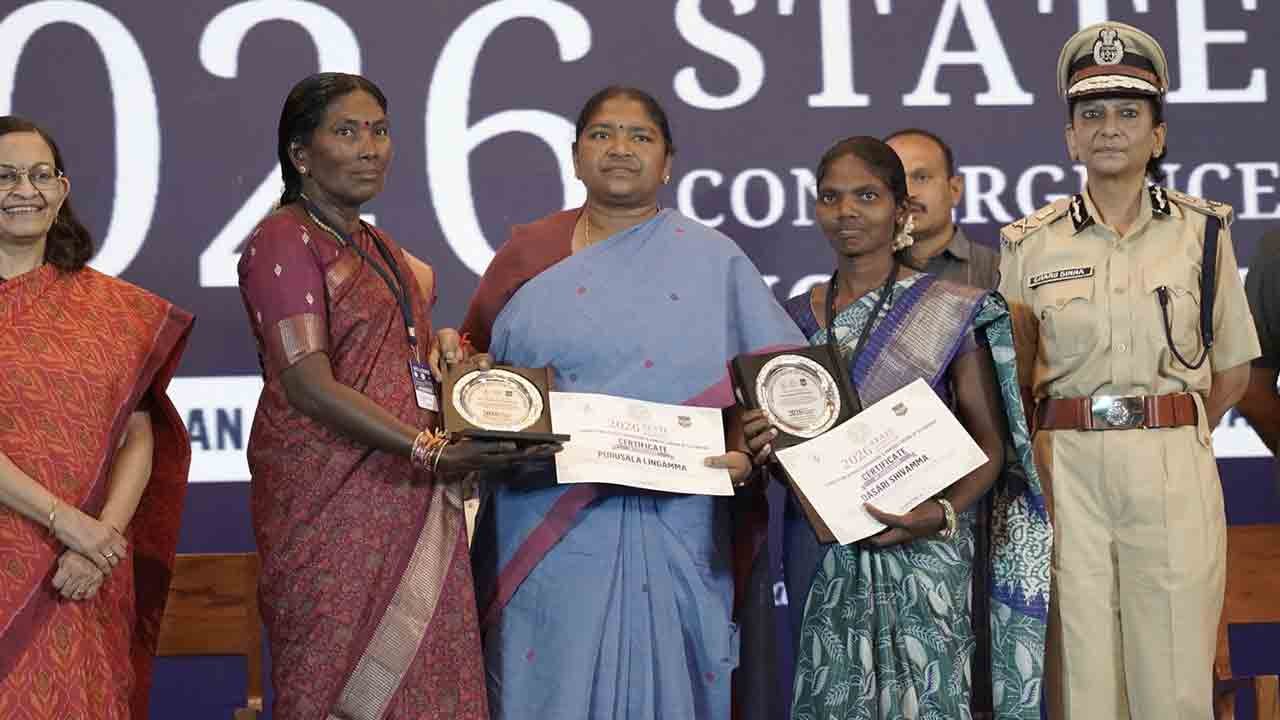
Hyderabad, 19th April 2026: The Women Safety Wing (WSW), Telangana Police, in collaboration with the International Justice Mission (IJM), conducted a State-Level Convergence Workshop on Combating Human Trafficking Pertaining to Bonded Labour at Marigold Hotel, Begumpet, Hyderabad.
The workshop brought together over 200 participants, including senior government officials, police officers, judiciary representatives, legal professionals, media personnel and civil society organisations, providing a vital platform to deliberate on emerging trends and strengthen coordinated responses to combat human trafficking and bonded labour.
The inaugural session was graced by Sri B. Shivadhar Reddy, IPS, Director General of Police, Telangana, along with Ms. Charu Sinha, IPS, Additional Director General of Police, Women Safety Wing, and Smt. D. Anasuya Seethakka, Hon’ble Minister for Women and Child Welfare.
The workshop featured focused discussions on evolving trends in human trafficking, bonded labour and sex trafficking, recognising bonded labour as a hidden and under-reported form of organised crime. Sessions highlighted the need for stronger deterrence mechanisms, improved enforcement of labour laws, strengthened prosecution systems and enhanced role of Anti-Human Trafficking Units (AHTUs).
Addressing the participants Sri B. Shivadhar Reddy, IPS, Director General of Police, Telangana emphasized that bonded labour is not merely a labour issue but a coercive organised crime, where victims are lured through false promises, trapped in exploitative conditions and often unable to escape without external intervention.
“The State Police should focus on proactive identification of victims, strong investigations, and ensure convictions using modern technology,” said the DGP
Ms. Charu Sinha, IPS, Additional Director General of Police, Women Safety Wing, highlighted that anti-trafficking discourse often overlooks adult bonded labour and stressed three key priorities: recognising debt bondage as a criminal offence, strengthening investigations across the entire chain of exploitation and ensuring a survivor-centric approach focused on dignity and safety.
Bonded labour is not a contract it is coercion. It often overlaps with trafficking offences, where the core issue is not movement, but exploitation through force, fraud, or coercion,” said the ADGP.
Smt. Anita Ramachandran, IAS, Secretary ,Women and Child Development Department, underscored that rescue alone is insufficient without sustainable rehabilitation, noting that lack of support systems often leads victims back into exploitative conditions. The Member Secretary, Telangana State Legal Services Authority, emphasised the judiciary’s role in enforcing constitutional protections and recognising non-payment of minimum wages as a form of forced labour.
Delivering the keynote address, Smt. Seethakka, Hon’ble Minister for Panchayati Raj & Rural Development, Rural Water Supply, Women & Child Welfare, Government of Telangana outlined that while it is important to have laws what is all the more important is to have effective implementation. Combating bonded labour and trafficking requires coordinated action across departments. Seethakka also stressed on the need to treat victims of bonded labour from other states with equal empathy and dignity . She pressed on the importance of strengthening local livelihoods, Self-Help Groups and community systems to reduce vulnerability to trafficking and bonded labour crimes .
Telangana State Labour Minister Mr. Vivek Venkataswamy said: “Bonded labour is a serious issue that severely undermines human dignity. Its eradication requires a collective effort from the government, civil society organizations (NGOs), and the public. NGOs play a crucial role in identifying victims, creating awareness, and supporting rehabilitation. I appreciate their continued support.
Strengthening awareness at the grassroots level is essential. People must understand their rights and avoid falling into exploitative systems. At the same time, laws must be strictly enforced to ensure justice for victims.
The government is committed to eliminating bonded labour. We are strengthening rescue efforts, rehabilitation programs, housing support, and social security measures. I urge all stakeholders, including NGOs, to work together in building a society free from exploitation.”
The workshop also highlighted the importance of community-level convergence, media engagement, data-driven policy approaches and streamlined rescue and rehabilitation mechanisms.
A defining moment of the workshop was the powerful testimony shared by survivor leader Smt. Shivamma of TRILINGA, underscoring the urgent need for survivor-led interventions and community-based prevention. She also called for the recognition of February 9 as Bonded Labour System Abolition Day in Telangana, to strengthen public awareness and collective action.
The deliberations concluded with a collective emphasis on multi-stakeholder coordination, capacity building and sustained policy engagement, reaffirming Telangana’s commitment to eliminating human trafficking and bonded labour through a comprehensive and collaborative approach.
International Justice Mission (IJM) supported the workshop as a technical partner, bringing in global expertise and field experience in addressing human trafficking and bonded labour. IJM works closely with government systems to strengthen prevention, rescue and prosecution.