

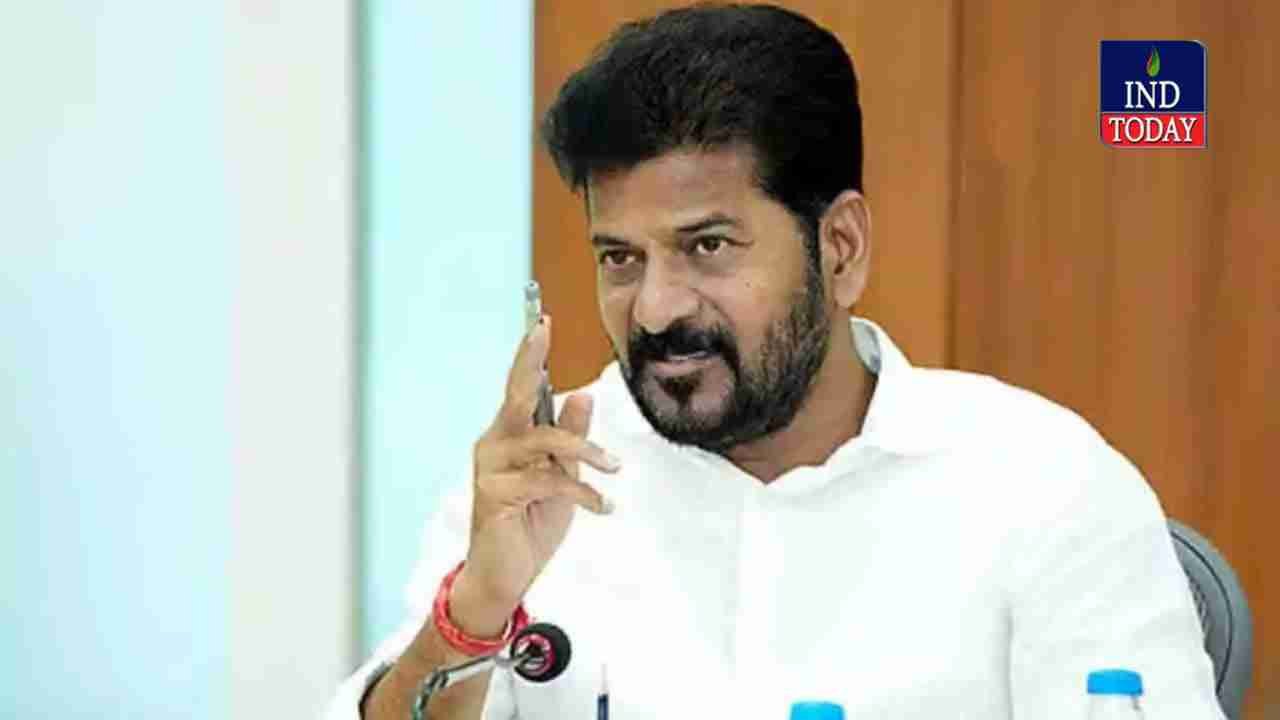
Hyderabad, April 14: A. Telangana Cheif Minister Revanth Reddy has proposed a “hybrid model” for the redistribution of Lok Sabha seats, suggesting a balanced approach that combines population-based allocation with economic performance criteria.
Addressing a press conference at the Secretariat, the Chief Minister said that as per the Supreme Court’s broader principle on reservations, opportunities should not exceed 50% and the remaining should be based on merit.
Applying a similar logic, he proposed that out of the 272 additional Lok Sabha seats under consideration, 50% (136 seats) should be allocated on a population (pro-rata) basis, while the remaining 50% should be distributed based on states’ Gross State Domestic Product (GSDP).
He argued that states contributing more to the national economy should receive fair representation on merit. “Southern states generate significant revenue and create employment. They should not be penalised,” he said.
Concern Over Disadvantage to Southern States
Revanth Reddy warned that increasing seats purely based on population would severely disadvantage southern states. He pointed out that such a move could allow governments to be formed without adequate representation from the South, turning it into a larger democratic concern rather than just a political issue.
He also alleged that the Centre, led by Narendra Modi, is linking women’s reservation with delimitation for political reasons. He clarified that the two issues are unrelated and demanded immediate implementation of 33% reservation for women based on the current number of seats.
Congress Commitment to Women’s Representation
Highlighting the role of the Indian National Congress, he said the party has historically ensured opportunities for women in key constitutional roles, including Prime Minister, President, and Speaker positions. He added that leaders like Rajiv Gandhi and Sonia Gandhi played crucial roles in advancing women’s reservation.
Historical Context and Growing Divide
The Chief Minister recalled that delimitation based on the 1971 Census was carried out during the tenure of Indira Gandhi. Later, restrictions on seat increases were extended by the government led by Atal Bihari Vajpayee to maintain balance between states.
He stressed that southern states effectively implemented population control measures, while northern states saw higher population growth.
As a result, purely population-based redistribution would widen the gap in representation.
Call for Wider Consultation
Revanth Reddy urged the Centre to conduct a nationwide consultation before taking any decision. He suggested holding all-party meetings, consulting experts, and debating the issue in Parliament and state assemblies before finalising the process.
He warned that a rushed decision could deepen the divide between northern and southern states and called for completing the entire process in a structured manner by 2028.