


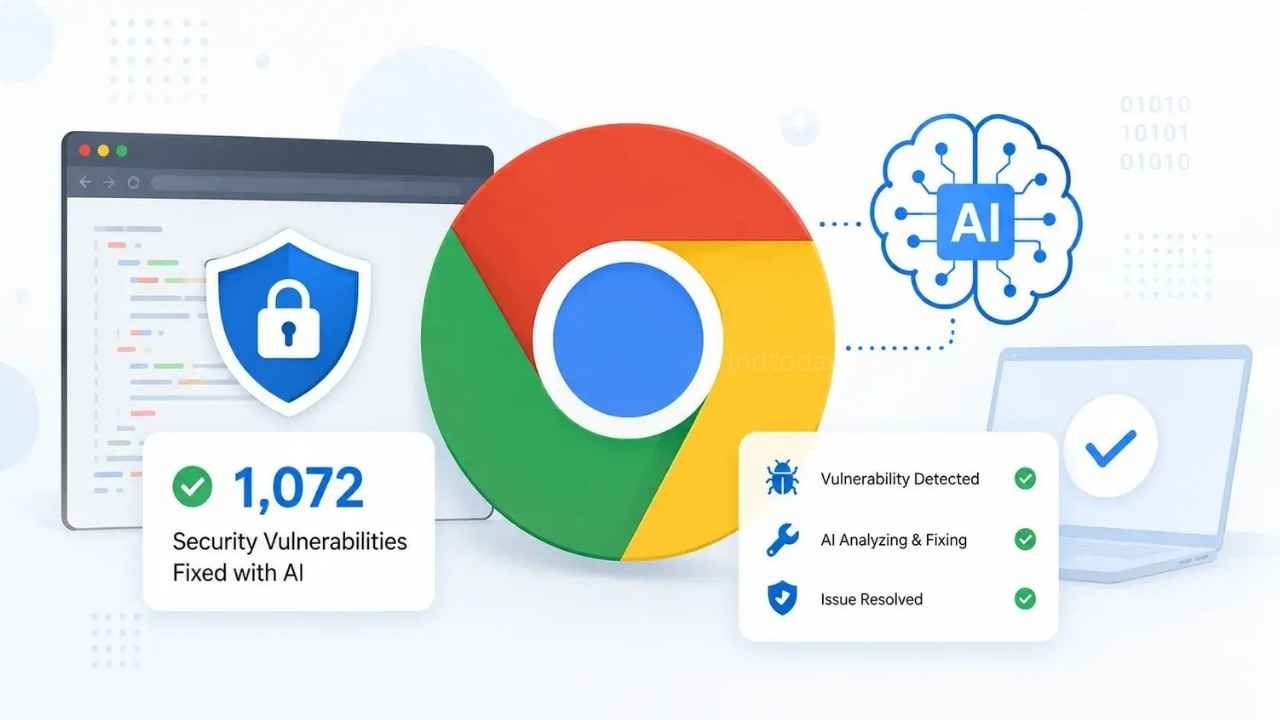
Internet, August 1: Google has revealed that its artificial intelligence powered security systems have dramatically strengthened Chrome’s security, helping engineers detect and fix 1,072 security vulnerabilities in just the last two Chrome releases. The company said the figure exceeds the total number of bugs fixed across the previous 23 Chrome milestones combined.
Google’s Chrome Security team said AI models powered by Gemini have transformed the browser’s vulnerability detection and repair process, allowing engineers to identify critical flaws more efficiently while significantly reducing false positives.
AI transforms Chrome’s bug detection and security
According to Google, an AI based security agent developed in early 2026 uncovered a critical sandbox escape vulnerability that had remained hidden in Chrome’s codebase for more than 13 years. The flaw could have allowed attackers to access local files through a compromised browser renderer.
The company said AI now also automates security bug triage by filtering duplicate reports, reproducing vulnerabilities, assigning severity and routing issues to the appropriate engineering teams. This has reduced manual analysis time from 5 to 30 minutes per report and is saving developers hundreds of hours every month.
Google has also introduced an AI driven repair system that generates multiple security patches, evaluates the best solution through a separate review agent and automatically creates tests to verify fixes before engineers conduct final reviews.
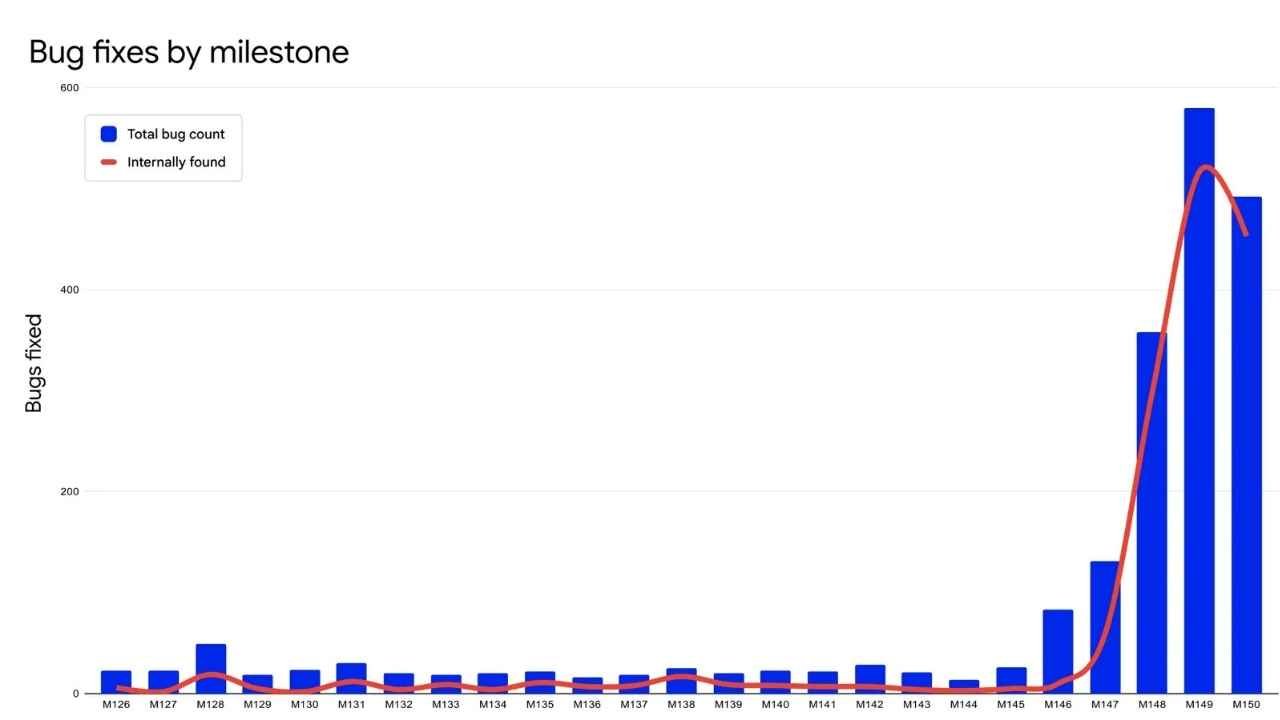
The company said its collaboration with Google DeepMind and Project Zero has strengthened Chrome’s continuous integration system. During May 2026 alone, AI tools prevented more than 20 security vulnerabilities, including critical issues, from reaching production.
To reduce the risk of attackers exploiting known vulnerabilities before users install updates, Google is introducing new patch deployment technologies. Chrome 150 already includes automatic browser restarts on macOS when updates are pending, while future releases will support dynamic patching, allowing background security updates without requiring users to restart the browser.
Google is also investing in long term security improvements by expanding MiraclePtr to eliminate use after free vulnerabilities, increasing compiler based memory safety and rewriting more high risk components in Rust.
The company said these AI powered technologies are helping Chrome stay ahead of increasingly sophisticated cyber threats while making the browser safer with every update.