




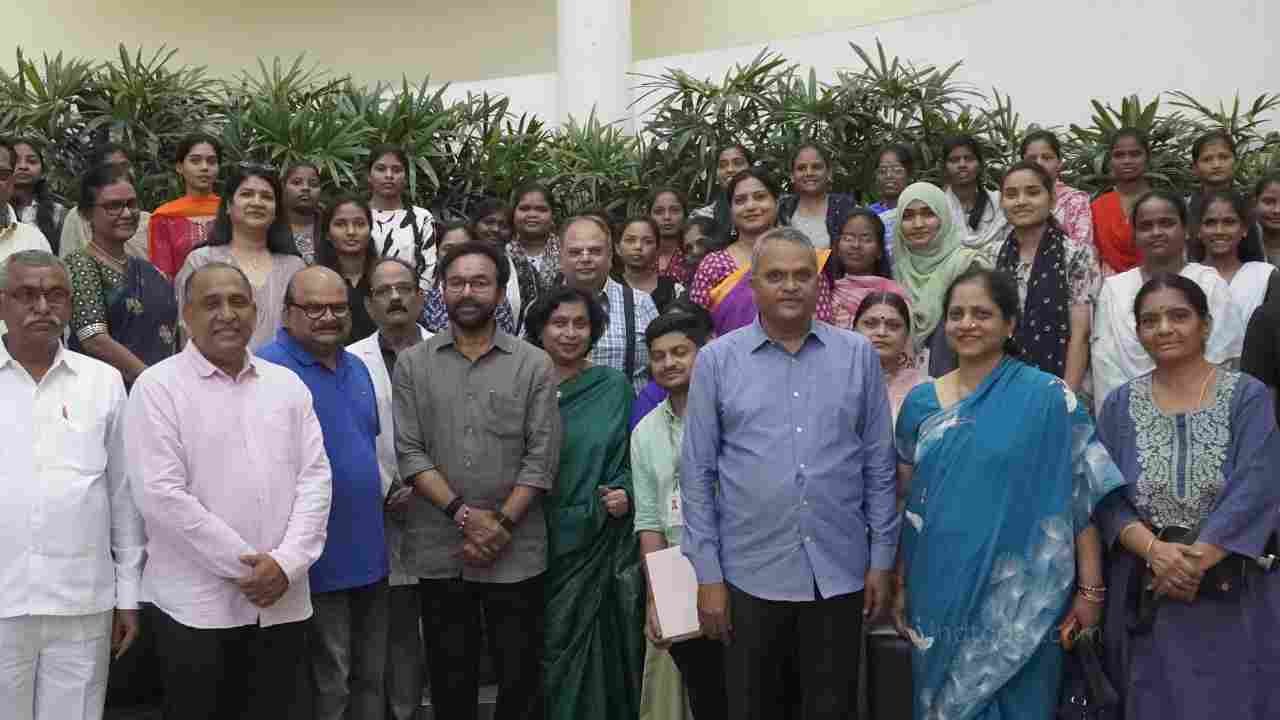
Hyderabad: Union Minister G. Kishan Reddy on Sunday inaugurated India’s first dedicated Neuro-Palliative Care Ward at Sparsh Hospice in Khajaguda and called for hospice and palliative care services to be included under the Central Government Health Scheme (CGHS) to make compassionate end-of-life care more accessible.
The newly established eight-bed Neuro-Palliative Care Ward has been designed to provide affordable, specialised and long-term care for patients suffering from advanced neurological disorders requiring palliative and nursing support.
Kishan Reddy Backs CGHS Coverage for Hospice Care
After inaugurating the facility, Kishan Reddy toured the hospice and interacted with doctors, healthcare professionals, staff and patients.
Describing Sparsh Hospice as a model humanitarian institution, the Union Minister said similar palliative care centres should be established across the country so that patients with terminal and chronic illnesses can spend the final phase of their lives with dignity and comfort.
He emphasised that hospice and palliative care should be brought under the Central Government Health Scheme (CGHS) so that eligible beneficiaries can access specialised care without financial hardship.
Kishan Reddy assured the management that he would take up the proposal with the competent authorities for consideration.
Neuro-Palliative Care to Support Advanced Neurological Patients
According to Dr. Anitha Kotha, Neurologist, and Dr. S.K.V. Raju, Anaesthesiologist and Palliative Care Specialist, the growing incidence of advanced neurological disorders has created an increasing need for specialised neuro-palliative care services.
They said patients suffering from conditions such as stroke, advanced dementia, Parkinson’s disease, neuropathies and spinal cord disorders often require continuous nursing care, pain management, rehabilitation and symptom control, placing a heavy burden on families.
The new Neuro-Palliative Care Ward aims to provide comprehensive multidisciplinary care at a highly subsidised cost, reducing the need for family members to remain with patients around the clock while ensuring quality treatment and support.
Sparsh Hospice Seeks Special CGHS Empanelment
During the event, the management of Sparsh Hospice submitted a representation seeking a special exemption for empanelment under CGHS.
The hospice explained that although it is one of India’s largest standalone hospice facilities with 82 beds, it does not qualify under existing CGHS norms because the criteria are designed for multi-speciality hospitals equipped with operation theatres, blood banks and advanced diagnostic facilities.
Founded in 2011 as a project of the Rotary Club of Banjara Hills Charitable Trust, Sparsh Hospice has served more than 16,500 patients and their families, with over 90 percent of beneficiaries receiving services free of cost. The institution currently supports nearly 600 patients every month through inpatient, outpatient and home-care services.
The management urged the Government of India to introduce a dedicated provision for empanelling standalone hospice institutions under CGHS, stating that such a move would improve access to specialised palliative care for Central Government employees, pensioners and their dependants while reducing pressure on tertiary care hospitals.
The inauguration was attended by doctors, healthcare professionals, trustees, philanthropists, Rotary members and well-wishers, who described the new Neuro-Palliative Care Ward as a significant milestone in expanding affordable palliative healthcare in India.